Detailed guide
Quick answer
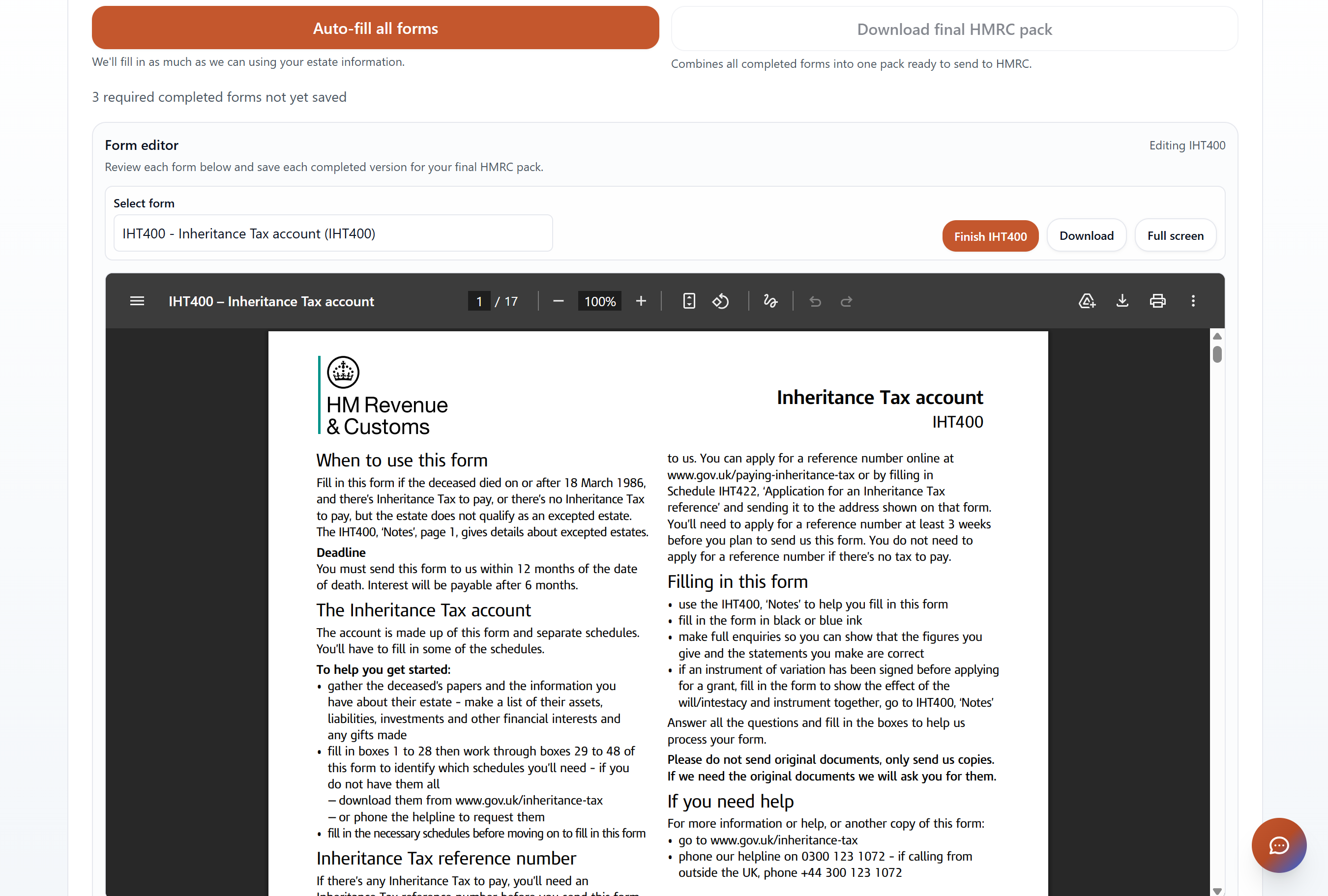
Inheritance tax comes first. Before you apply for probate, you value the estate and work out whether it needs the full IHT400 account. Most estates are "excepted": they owe no tax and send no form, so you can apply for probate as soon as you have the figures. If the estate needs an IHT400, you send it to HMRC and pay any tax due first. HMRC then sends a code, usually within 20 working days, and you can't apply for probate until you have it.
Route 1: an excepted estate
This is the route most estates follow.
- Value the estate at the date of death. See how to value an estate for probate.
- Check the excepted estate conditions. In short: no tax to pay, and the estate within the limits on value, gifts, trusts and foreign assets. Which inheritance tax form do I need? sets them out.
- Apply for probate, giving the estate's values and answering the inheritance tax questions in the application. There's nothing to send HMRC.
- Wait for the grant. GOV.UK says it usually arrives within 12 weeks of applying.
Route 2: the estate needs an IHT400
- Value the estate in full. The IHT400 asks for more detail than a probate application, with schedules for property, bank accounts, shares, gifts and other assets.
- Get a payment reference number from HMRC, at least 3 weeks before you pay.
- Pay the tax due, often straight from the person's bank accounts through the Direct Payment Scheme. Tax on property can usually be paid in instalments. See how to pay inheritance tax before probate.
- Send the IHT400. It must reach HMRC within 12 months of the death, and before you apply for probate.
- Wait for HMRC's code. HMRC usually sends it within 20 working days of receiving the IHT400 or the payment, whichever is later.
- Apply for probate, giving the code.
- Wait for the grant, then collect the money, pay any tax still outstanding, and deal with the estate.
This route applies even when no tax is due, for example when an estate only avoids tax because of the residence nil-rate band. You still send the IHT400 and wait for HMRC's code before applying.
An example timeline
Eileen died on 10 March. Her estate is worth £700,000, and she left everything to her nephew, so the estate owes inheritance tax and needs an IHT400.
- March to June: her executor collects date-of-death values and gets a payment reference number.
- June: the banks pay the tax on her savings to HMRC under the Direct Payment Scheme. The executor chooses instalments for the tax on the house.
- July: the executor sends the IHT400.
- August: HMRC's code arrives, and the executor applies for probate.
- 30 September: the payment deadline, which is the end of the sixth month after the month of death. The first instalment on the house is due.
- Autumn: the grant arrives, and the house goes on the market.
Because the payment went in before the end of September, no interest was charged on it. Had the executor waited for probate before paying, interest would have started on 1 October.
Timing traps
- Interest doesn't wait for probate. It runs from the end of the sixth month after the month of death, wherever your application has got to.
- The house usually can't be sold first. A house in the person's sole name can't normally be sold until the grant has been issued, so the tax on it can't come from the sale. That's what instalments are for.
- Valuations take longer than expected. Some banks and pension schemes take weeks to reply. Ask for date-of-death figures early.
- The IHT400 route adds a wait. HMRC's code usually takes up to 20 working days, on top of the time the account takes to prepare. Allow for it before telling the family when the house can be sold or money paid out.
- A late discovery can change the route. An asset or gift found later can take the estate outside the excepted conditions. If that happens, an IHT400 may be needed even after probate has been granted.
Scotland
The inheritance tax rules are the same across the UK, and the tax is also dealt with before confirmation in Scotland. The application for confirmation includes an inventory of the estate on form C1. See how to apply for confirmation in Scotland.
Where Estate Suite helps
Estate Suite works out which route the estate is likely to follow from the figures you enter, sets the payment deadline from the date of death, and keeps the tax steps and the probate application in the right order.
FAQ
Can I apply for probate before paying inheritance tax?
If the estate is excepted, yes, because there's no tax to pay. If it owes tax, you normally need to pay what's due before HMRC issues the code you need to apply. Tax on property can often be paid in instalments, and HMRC can agree a grant on credit if the money can't be raised.
How long after sending the IHT400 can I apply for probate?
Once you have HMRC's code. HMRC usually sends it within 20 working days of receiving the IHT400 or the payment, whichever is later.
Do I need to wait for HMRC if the estate is excepted?
No. There's no form to send HMRC, so you can apply for probate as soon as you've valued the estate.
Does paying inheritance tax early help?
Yes. Interest runs from the end of the sixth month after the month of death, and paying on account before then means no interest on what you've paid.